Okay. This one has been a little while coming.
I went to Oslo to see the viking ships. There are three in the astutely named
Viking Ship Museum (not to be confused with the museum of the same name and subject matter in Roskilde). The museum is a fjord away from the city center, where I was staying. There's a bus which goes (very) regularly but the best way to get across is by ferry.
 |
| It offers great views of the fortress. |
It was good museum weather the morning I went over, and a lot of people seemed to have the same idea as me - even at 9am the ferry was full. The area it goes to has the Ship museum, the Cultural History Museum, the Maritime Museum, the Kon Tiki museum and the Fram museum all within a couple of kilometers.
 |
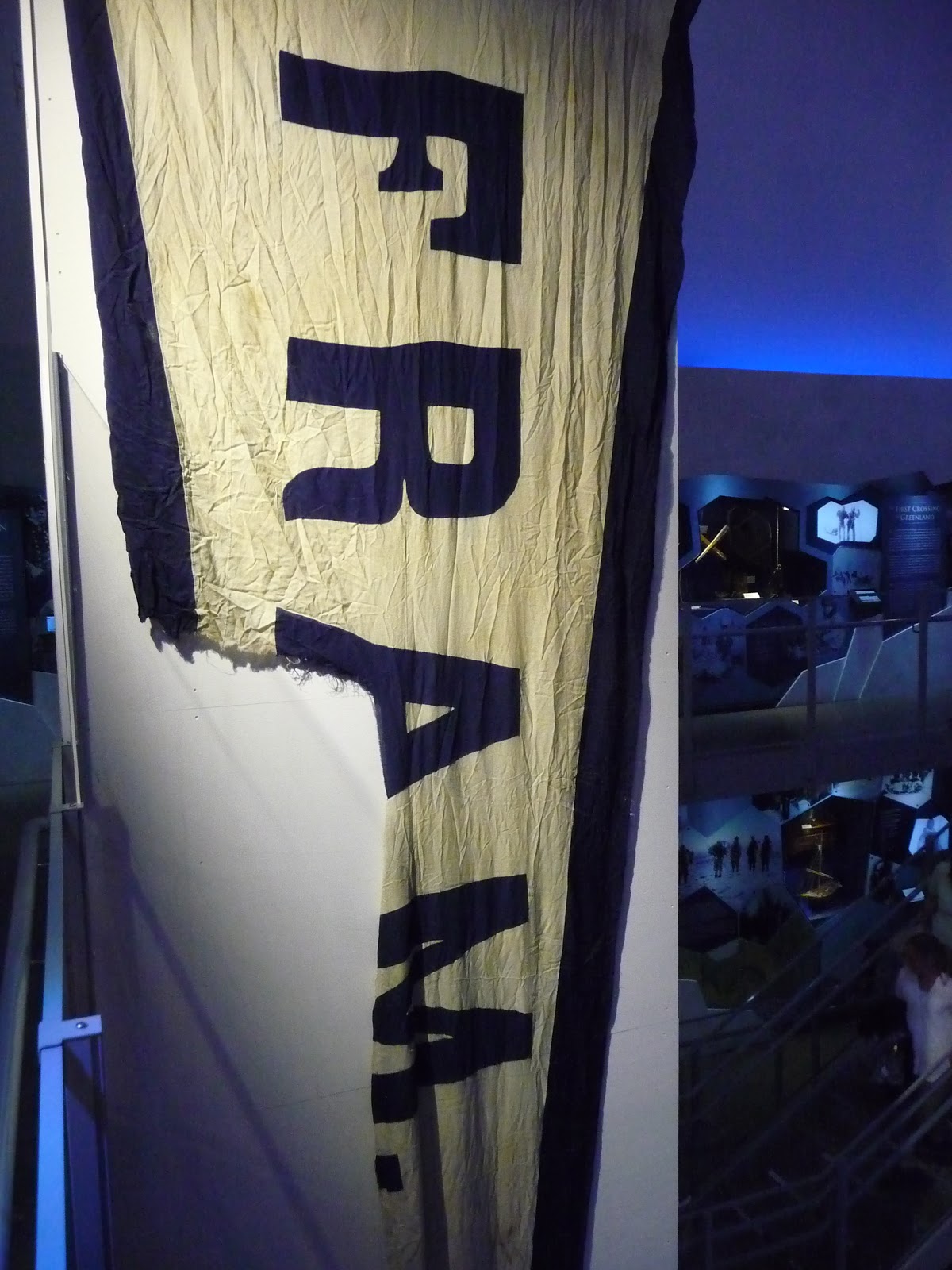
| Forward! |
I got to the Fram museum later in the day, but I'm covering that in a separate post.
So. The ships. I fought through the eight (8!) bus loads of Spanish and Russian tourists (my first boganskiis!) and got my first look at the most famous item in the collection, the Osberg ship.
 |
| Click for the full size photo, have a look at the carving. |
The Osberg ship is important for a bunch of reasons. It was the burial ship for a woman of importance (women were respected, respected women were buried like men). It is the most complete ship found to date, and there was a lot of stuff on board. All the gold and silver had been removed by grave robbers and, if there were any weapons originally buried, these were taken too. What was left was still fascinating; animals, a functioning cart, a few sleds, tools for food preparation and textile manufacture, all things to make life easier in the next world.
 |
| View from the stern; note the small rudder |
The shape of the ship is also interesting. It sits low, only three or four boards above the water line. This, combined with the intricate carvings at the bow and stern leads people who know stuff about boats to think it was a pleasure craft, used for 'royal' days on the water. That this person was rich enough to have a leisure craft is fascinating as well. What interested me is that there is clearly a deck, with removable planks. I've since read that these could be lifted to bail the ship.
Next was the
Gokstad Ship. Of the three, this was my pick.
 |
| Note the oar holes, the difference in the depth of the keel |
Like the Osberg, this was a burial ship and like the Osberg, all the pretty stuff had been nicked by grave robbers. None of that matters though, because the boat itself is fascinating.
The rudder is huge, especially compared to the Osberg; even the tiller is much larger. But most interesting; it's removable. It could be lifted to allow this ship, which has a much deeper draft than the pleasure-boat above, to move through shallow waters without damaging the steering.
Also cool were the oar holes, which could be covered with wooden flaps to stop water coming in when the oars were shipped. The Gokstad ship is easily the largest clinker I've seen (it would have had 32 Oarsmen) and was reinforced with ribs. Much larger than this and the ship can't be clinker built.
The Tune Ship is the worst preserved of the three. It's also built of clinkered oak and would have been smaller than the others (around 24 oars).
 |
| Burial tent |
Along with the Tune Ship were a number of larger items taken from the other burials; a tent, where the human remains and personal belongings were found in the Gokstad burial, and the Gokstad boats.
 |
| Smaller clinker boats from the Gokstad |
The burial items reinforced both the intricacy and beauty of Viking era woodwork and the extended trading network that the Scandinavians possessed.
 |
| Wagon from the Osberg |
I found it interesting that while the wagon would have been used only for special occasions, the sleighs would have been in common use. Dogs to pull the sleighs and horses for the wagon were also found in the Osberg grave.
 |
| Sleigh bar from the Osberg |
And while robbers took all the silver and gold pieces from the burials, they did not take every item of bronze or iron, leaving behind some fascinating jewelry.
 |
| Smaller pieces, from all over the world |
A lot of these decorate other simple items; the sheath of a knife or a belt or the like.
 |
| More shiny stuff |
Upstairs they had the human remains from the graves on display. For all the talk of giant viking warriors, I need to remember that these people lived a thousand years ago. Tall meant something different then. One of them, a king in his prime, had legs which were not even as long as my arm. They might have been tall for their time, but we would tower over them today.
Keep that in mind when looking at the photos of the ships. What looks impressive to us would have been enormous to these tiny vikings.
And before I knew it, it was lunch time. I stepped out into the sunlight (it had become a beautiful day - see the photos from that afternoon, below) and went in search of a sandwich, a cup of coffee and the Fram.
Forward!